New Year, Same Responsibilities: Manufacturing Firm Fined After Apprentice Suffers Serious Injuries
As businesses reflect on the year just gone and prepare for the year ahead, a recent prosecution by the Health and Safety Executive (HSE) is a timely reminder that health and safety responsibilities do not reset with the calendar.
The case involved a manufacturing firm that was fined after an apprentice suffered serious, life-changing injuries while operating machinery. While the incident itself did not occur at the end of the year, the lessons it highlights are particularly relevant as organisations review performance, risks, and priorities for the year ahead.
Contents
What Happened?
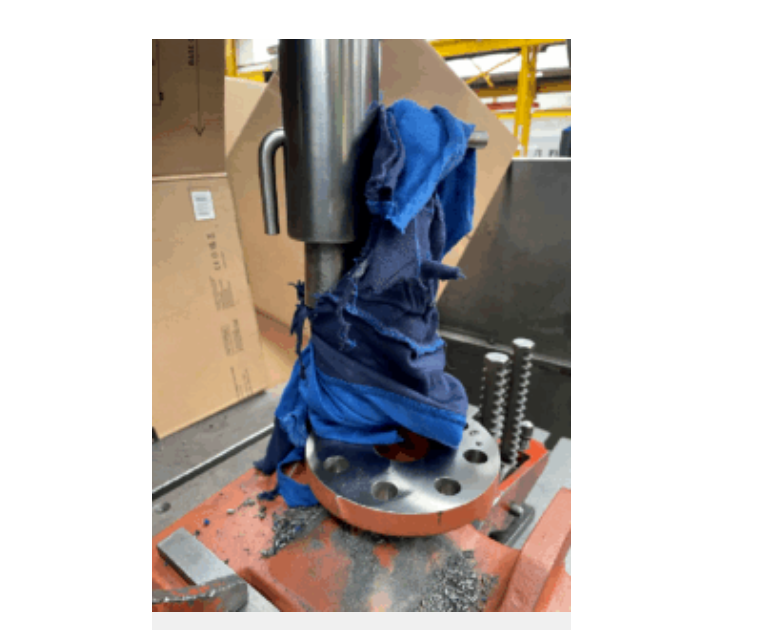
An 18-year-old apprentice was seriously injured while operating a radial-arm drill in a manufacturing workshop. During use, his clothing became caught in the rotating machinery, pulling him into the machine.
Injuries Sustained
The apprentice suffered:
Multiple broken ribs
Extensive soft-tissue injuries to the chest
Skin grafts and a prolonged hospital stay
Around six months away from work
Permanent scarring and loss of sensation
Following an investigation, the HSE concluded that the risks associated with the machinery had not been adequately controlled.
Why the HSE Took Enforcement Action
The HSE identified several fundamental failings in the company’s health and safety arrangements.
Inadequate Machine Guarding
Dangerous moving parts were not adequately guarded, allowing access during normal operation.
Failure to Protect a Young Worker
The apprentice’s lack of experience was not properly considered or managed.
Poor Risk Identification and Control
Machinery risks were not effectively assessed or controlled.
The employer was prosecuted under Section 2(1) of the Health and Safety at Work etc. Act 1974, which requires employers to ensure, so far as is reasonably practicable, the health, safety and welfare of employees.
Apprentices and Young Workers – A Year-End Reminder
The start of a new year often brings new starters, apprentices and role changes. Young workers remain at higher risk in manufacturing environments due to limited experience and hazard awareness.
Legal Expectations for Young Workers
Employers are expected to:
Identify young workers in risk assessments
Consider inexperience and lack of maturity
Provide suitable supervision
Prevent exposure to uncontrolled high-risk activities
These considerations should be reviewed regularly, not just after an incident.
The legal requirement to specifically consider risks to young persons is set out in Regulation 19 of the Management of Health and Safety at Work Regulations 1999.
Machine Guarding Risks in Manufacturing
Machinery guarding remains one of the most common causes of serious injuries in manufacturing.
When Guarding Becomes Normalised Risk
Over time, unsafe arrangements can become accepted as “the way it’s always been done”.
If a worker can:
-
Reach moving or rotating parts
-
Be pulled into machinery by clothing
-
Access dangerous areas during normal operation
Then the guarding arrangements are unlikely to be legally adequate.
Employers have an absolute duty (“every employer shall”) to prevent access to dangerous parts set out in Regulation 11 of the Provision and Use of Work Equipment Regulations 1998.
Why Competent Person Support Matters
Many businesses do not deliberately ignore safety risks. More often, issues are missed, assumed to be acceptable, or carried forward year after year.
Independent Oversight
A competent person provides an objective view of compliance and risk.
Early Identification of Machinery Risks
Issues such as poor guarding or unsuitable use of equipment are often identified early through competent review.
Practical and Proportionate Advice
Competent support helps businesses focus on what is reasonably practicable – not unnecessary paperwork.
In many cases, competent person involvement highlights warning signs long before an incident occurs.
How Health & Safety Audits Help Prevent Incidents
Regular audits are one of the most effective ways to identify risks before they cause harm.
What Audits Typically Identify
Audits help to:
Identify machinery and guarding deficiencies
Confirm whether risk assessments reflect real shop-floor activity
Highlight gaps in supervision, training or maintenance
Provide evidence of due diligence
Audits are particularly effective at year-end or the start of a new year, when businesses are already reviewing performance and setting objectives.
Training Is Important — But It Is Not Enough
Training plays an important role, but it cannot compensate for unsafe machinery.
The Hierarchy of Control
Eliminate or reduce risk through design and guarding
Apply engineering controls
Support with training and supervision
Where physical safeguards are missing, training alone offers little protection — and little defence following an HSE investigation.
The Cost of Carrying Risks Into a New Year
In this case, the business faced a significant fine and legal costs. However, financial penalties are only part of the impact.
Wider Business Consequences
Serious incidents often lead to:
Production disruption
Increased regulatory scrutiny
Higher insurance premiums
Reputational damage
Long-term harm to workers
These are risks no manufacturing business wants to carry into a new year.
Final Thoughts for Manufacturing Businesses
New Year’s Eve is a natural time for reflection. For manufacturing businesses, it can also be a sensible opportunity to review whether known risks have been properly addressed, or whether they have gradually become accepted as part of normal operations.
Support from a competent person, alongside periodic health and safety audits, can provide a structured and independent review of these risks. At TIPS Consultancy Ltd, our audits are designed to help identify issues early and provide clear, practical guidance on what controls should be in place, taking account of what is reasonably practicable for the business.
As this case demonstrates, unresolved risks do not disappear with time. Regular review and competent support can help ensure risks are managed effectively, reducing the likelihood of serious incidents and avoidable enforcement action.