What is the Safest Option for Portable Heating in the Office?
Let’s get straight to the point – it’s only a portable heater, right? You might use one at home, bought from a local supermarket or hardware store, and think, “Nothing’s ever happened, so it can’t be a big deal at work.”
Wrong – and here’s why.
Contents
Domestic vs Workplace Heating – The Key Differences
The main differences between using a heater at home and in the workplace are:
- At home, you know your family and who to trust – informal “management” is stronger.
- You’re not legally obliged to manage fire risk at home.
- In the workplace, however, you are legally required to carry out a fire risk assessment under the Regulatory Reform (Fire Safety) Order 2005. Most professional assessors use the PAS 79-1 format for non-domestic premises, which includes a specific section on “portable heaters and heating installations.” Getting this right early prevents costly remedial actions or insurance complications later.
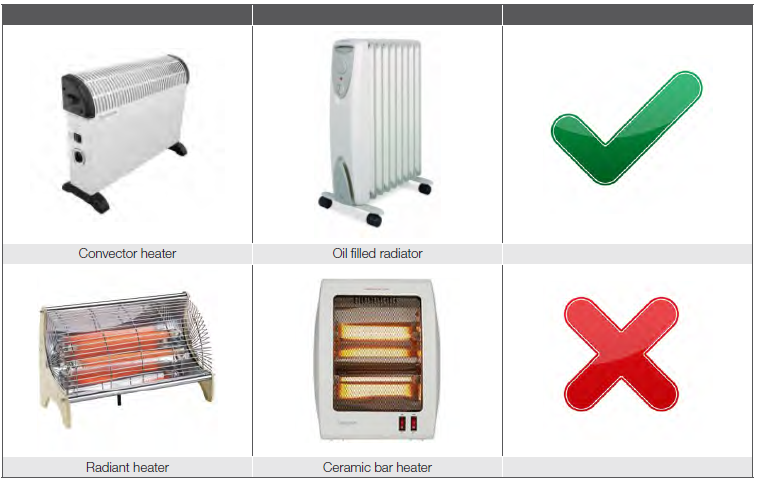
Portable Heater Types to Avoid in the Workplace
The most common types of heaters to avoid – often found for sale at your local Screwfix or similar retailers – are:
- Fan heaters (including ceramic models)
- Halogen heaters
These types contain radiant elements which can easily ignite nearby combustibles. Halogen heaters, in particular, present a high fire risk if placed too close to paper, fabric, or furniture.
These types of heaters are generally designed for domestic use and should be avoided in the workplace.
Portable Heater Recommendations For The Workplace
According to the Fire Protection Association, the safest types of portable heaters for offices without fixed central heating are:
- Oil-filled portable radiators
- Convection heaters
Oil-filled heaters are generally preferred as they have no exposed heating elements and are less prone to overheating, so they’re relatively low risk in terms of igniting any items nearby.
That said, eliminating the need for portable heaters altogether is the safest approach. If staff are requesting extra heating, investigate and repair the fixed heating system before resorting to portable units.
Before You Buy or Use a Portable Heater in the Workplace
Make sure that:
- The heater has a built-in thermostat.
- Time switches are not used, to prevent heaters running unattended.
- The heater is plugged directly into a wall socket – never via an extension lead.
- Both the heater and socket are visually checked before each use for damage or overheating.
- The fixed wiring has a satisfactory Electrical Installation Condition Report (EICR) in date.
- Heaters are not connected to circuits supplying computer servers or other critical equipment.
- The heater is BEAB-approved (British Electrotechnical Approvals Board).
- Flexible leads are as short as practicable, kept tension-free, and positioned to avoid trip hazards.
- All portable heaters are inspected and PAT-tested periodically in line with the Electricity at Work Regulations 1989. Faulty units should be removed from service and clearly labelled.
Effective Management and Safe Use of Portable Heaters in the Workplace
Once you’ve selected a suitable heater, management controls are crucial:
- Use must be authorised by a designated person with basic fire-safety awareness.
- Heaters must not be used where flammable vapours, gases, or dusts may be present.
- Aerosols and deodorants should not be used near operating heaters.
- Visual checks should be done before each use, and heaters must not be left unattended.
- Staff using heaters should know how to operate them safely and understand their hazards.
- Do not move heaters while hot or in operation.
- Maintain and clean heaters in line with manufacturer’s instructions, recording maintenance and testing.
- Remove damaged heaters immediately from service.
- Provide adequate ventilation in areas where heaters are used.
- Keep heaters clean and dust-free.
- Personal heaters from home should not be brought into the workplace.
- When no longer required, heaters should be removed from site.
- Maintain a 1-metre clearance around all heaters to prevent blockage or ignition.
Which Portable Heater to Use in The Workplace?
Dimplex are a reputable brand for heating solutions, and according to their website, a large proportion of their products carry the BEAB Approved Mark. This demonstrates that an independent third party has verified their safety. Therefore, our recommendation would be a Dimplex oil-filled portable heater.
Before purchasing your Dimplex portable heater, you must contact the supplier or Dimplex directly to confirm that the specific model holds the BEAB Approved Mark and that the manufacturer’s instructions and safety guidelines are available.
Free Additional Resources - TIPS Consultancy Ltd
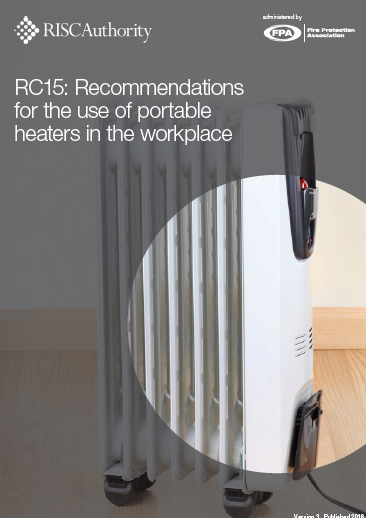
The recommendations in this post are broadly in accordance with the RC15: Recommendations for the Use of Portable Heaters in the Workplace issued by the Fire Protection Association. The document can be accessed by clicking below.
In addition, to improve the management of portable heaters in your workplace, I have prepared an authorisation and training document to formalise the process. This document should be populated with your business details and the details of the portable heater you have purchased. Ensure that the relevant persons have signed it and retain a copy for your records. The completed document should also be made available to your fire risk assessor during your annual review.
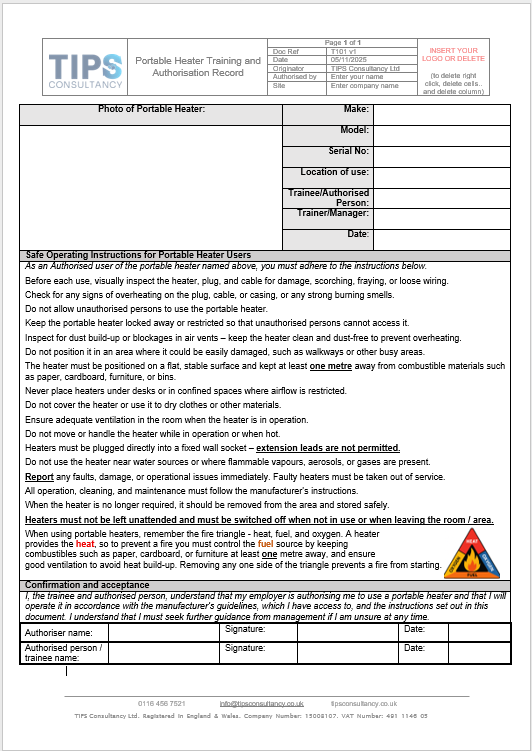
The Portable Heater Training and Authorisation Record can be accessed by clicking below.
3 thoughts on “What is the Safest Option for Portable Heating in the Office?”
So helpful and knowledgeable!