Managing Stress in Health and Safety Roles – A Message for HR Managers
Managing Stress in Health and Safety Roles – A Message for HR Managers Engaging an external competent person or experienced
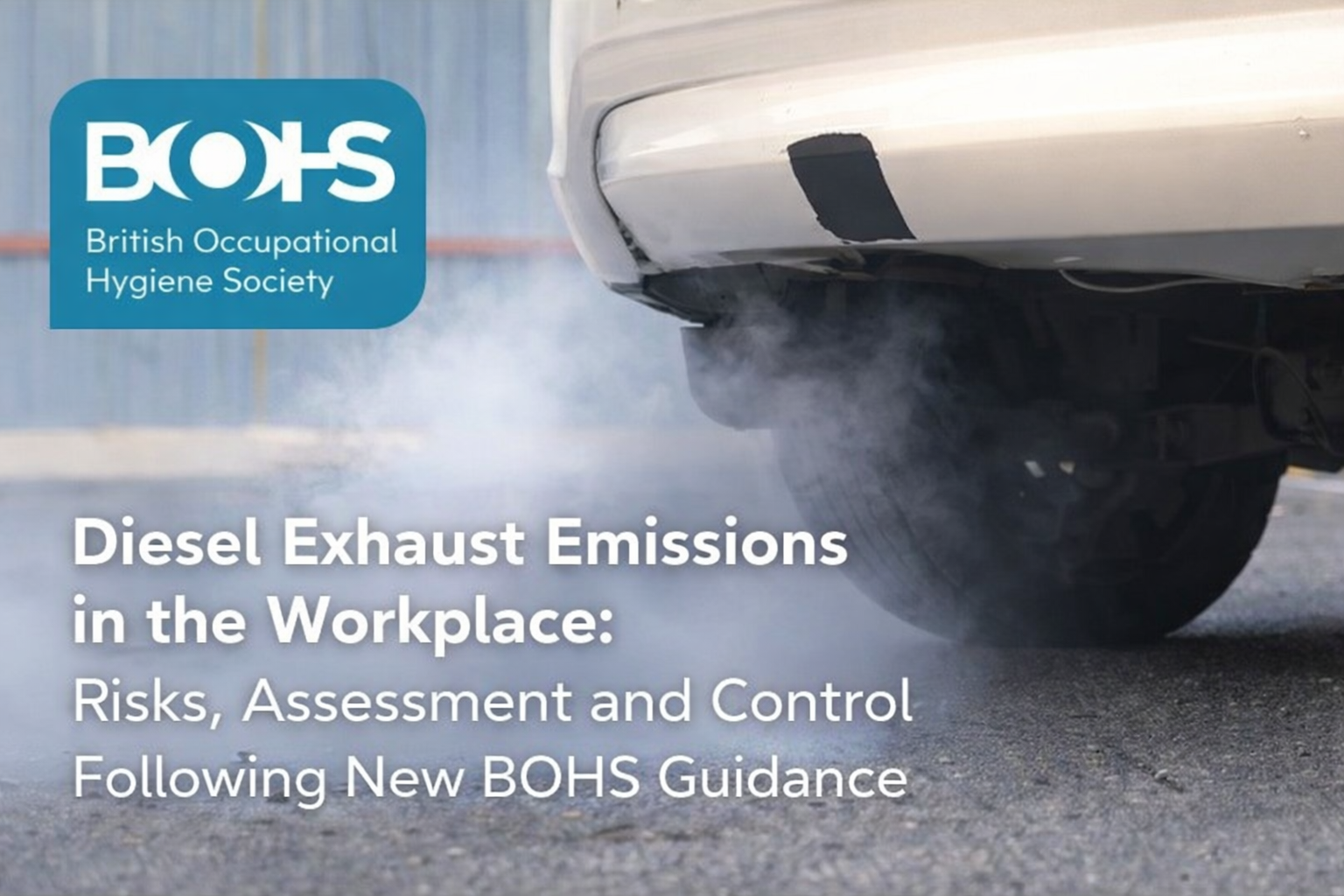
The British Occupational Hygiene Society have published new guidance on the assessment and control of the Health Risks From Diesel Engine Exhaust Emissions (DEEEs).
Sarah Leeson, BOHS President-Elect says “If diesel engine exhaust emissions are present in the workplace, they need to be controlled so that harmful exposures are reduced to as low a level as can be reasonably achieved. ”
Those at higher risk typically work in construction, transport, logistics, warehousing, mining, manufacturing and maintenance activities.
Short term (acute) effects of exposure to diesel exhaust emissions can cause irritation to the eyes or respiratory tract. Other symptoms may include feeling lightheaded, headache, or nausea.
Long term exposure may lead to chronic health effects. Some components of DEEEs, such as Polycyclic Aromatic Hydrocarbons (PAHs), are carcinogenic and there is evidence that repeated exposure to diesel fumes increases the risk of lung cancer. In 2012 the International Agency for Research into Cancer (IARC) classified exhaust emissions arising from the combustion of diesel fuel in compression ignition engines (DEEEs) as a Group 1 Carcinogen – carcinogenic to humans.
You need to first carry out a suitable and sufficient COSHH / Risk Assessment and assess:
If you are unsure whether you have a problem, we always inform our clients to engage with a competent occupational hygienist to have workplace air monitoring carried out.
You can find an occupational hygienist here: https://login.bohs.org/BOHS/Membership/2/BOHS/Directory-of-Occupational-Hygiene-Services/DOHSsearch.aspx?hkey=9ebddff5-70b9-455e-b77d-d310c2dcf4b6&_ga=2.21783282.830785719.1770309669-961890961.1770027091
When using the directory, be sure to select “workplace air monitoring”.
Follow the hierarchy of control when mitigating DEEEs exposure; the below table, based on guidance from BOHS, outlines controls that are known to reduce the risk of exposure. Although engineering controls are more effective, there are safe work practices which can also be effective at eliminating or reducing exposure. However, work practices are prone to human error which can reduce their overall effectiveness.
Control method | Example of Control Measures |
Elimination | • Use electric powered equipment (e.g. buses, forklifts, trucks). • Whenever possible, schedule and perform tasks where there are no DEEEs sources (also a work practice control). • Connect to alternative auxiliary power sources. For example, in rail depots, lighting and heating could be run from electrical supplies allowing servicing activity with the train engine switched off and therefore DEEEs stopped. |
Substitution | • Use alternative fuels (e.g. dimethyl ether, low sulphur diesel). • Implement a vehicle/equipment replacement program with engines that will produce less combustion-related emissions (e.g. propane, natural gas, biofuels). • Replace old diesel-powered equipment with newer, more efficient diesel-powered equipment. |
Engineering controls (at source) | • Engine modification (e.g. implement a retrofit program to rebuild diesel engines that produce less emissions). • Install catalytic converters (e.g. forklifts, trucks, buses). • Install selective non-catalytic reduction (a method that can be used to reduce nitrogen oxides emissions). • Implement exhaust gas recirculation (another nitrogen oxides emissions reduction technique). • Install diesel particulate filters (DPF). • Routine exhaust emission testing. |
Engineering controls (ventilation) | Dilution Ventilation • Increase building general ventilation rate . • Provide sufficient fresh air from an uncontaminated source. • Use mechanical ventilation to draw fresh air into the workplace. Filtration • Air filtration inside vehicle cabs, keep under positive pressure. • Keep offices or toll booths under positive pressure. Local Exhaust Ventilation • Install local exhaust or extraction ventilation (e.g. in enclosed spaces such as maintenance and repair shops). • Isolate equipment (in an enclosure if practicable) and ventilate the exhaust away from the workplace. |
Work practices (administrative controls) | • Perform training on DEEEs hazards and the control measures. • Reduce use of diesel engines inside buildings or structures. • Run engines outdoors (if possible), especially during warm up. • Allow cold engines to warm up in well ventilated areas. • Open garage doors before starting vehicles, keep doors open (where practical and weather permitting) for at least 10 minutes following vehicle operation. • Turn engines off when not needed – no engine idling policies. • Proper maintenance of the engine and exhaust system, perform regular maintenance on vehicles or equipment (follow the manufacturer instructions and guidance). • Minimise tasks and their duration (if possible) that are performed in close proximity to DEEEs sources. • Maximise distance between workers and DEEEs sources, segregation if possible. • Rotate jobs between different employees to reduce exposure. |
Personal protective equipment | • Until alternative control can be implemented use suitable respiratory equipment (RPE) with their selection and associated control measures covered by a full risk assessment. Protection from both particulate and gaseous components should be considered. |
Source: BOHS, Guidance for Occupational Hygienists on the Assessment and Control of the Health Risks from Diesel Engine Exhaust Emissions (DEEEs), January 2026, Version 1, Page 10.
Once your controls are implemented, you can re-engage with your occupational hygienist to conduct workplace air monitoring to ensure the risk is at an acceptable level. Health surveillance may be required where there is a risk.
It can be daunting to understand where the risks lie. Our competent person service helps you identify the key risks in your business and guides you on the steps needed to manage health and safety effectively.

Health and Safety Consultants based in Leicester and operating nationwide.
Direct access to an experienced health and safety consultant
Trusted advice aligned with UK legal duties
Practical solutions that protect directors and businesses
Relationship-led support, built on long-term trust
No long contracts or restrictive tie-ins
Credible support respected by insurers and regulators

Managing Stress in Health and Safety Roles – A Message for HR Managers Engaging an external competent person or experienced

Why Health and Safety Managers Should Engage External Competent Support Engaging an external competent person or experienced health and safety
Manufacturer fined after employee’s fingers severed following PUWER failings This incident highlights how failures in machine safety controls and maintenance
Diesel Exhaust Emissions in the Workplace: Risks, Assessment and Control Following New BOHS Guidance The British Occupational Hygiene Society have

What Is a Health and Safety Competent Person — And Why Every Business Needs One A health and safety competent
SME sentenced after PUWER breaches and death of employee Stanley Wire Limited was fined after an operative suffered a fatal

New Year, Same Responsibilities: Manufacturing Firm Fined After Apprentice Suffers Serious Injuries As businesses reflect on the year just gone

HSE Visit After a Workplace Accident – What Directors Need to Know A visit from the Health and Safety Executive

Fire Risk Assessment Considerations for Electric Vehicle Charging Points – What Every Business Should Know With the government offering tax

What is the Safest Option for Portable Heating in the Office? Let’s get straight to the point – it’s only